Introduction
The SIM card has long been the gatekeeper of mobile connectivity. Tiny, plastic, and stubbornly tied to your identity, it’s been a silent partner in letting telecom companies, advertisers, and in many parts of the world governments, track you with surprising accuracy. But now that physical SIM cards are being replaced by eSIMs (embedded SIMs), a quiet revolution is underway.
An eSIM is a programmable chip embedded directly in your smartphone or tablet. It eliminates the need to physically swap SIM cards when switching carriers, traveling, or switching data plans. The technology has been adopted rapidly, especially by travelers and digital nomads who need flexibility on the move. But while the tech has changed, the privacy concerns have not.
Telecom providers still often require Know Your Customer (KYC) verification, upload your ID, selfie, passport, utility bill, and possibly your DNA sample (okay, not yet, but give them time). This creates a serious privacy gap for people who want to stay anonymous or who live under surveillance regimes. The demand for an Anonymous eSIM Without KYC has never been higher.
Enter ZeroID, a Solana-powered platform offering instant, global, crypto-paid connectivity, without asking who you are. In a world increasingly hostile to anonymity, ZeroID makes it possible to go truly off the grid… while still staying online.
In over 150 countries, SIM registration laws mandate you hand over your personal data to access mobile service.
The good news? You can now connect anonymously - yes, even in 2026.
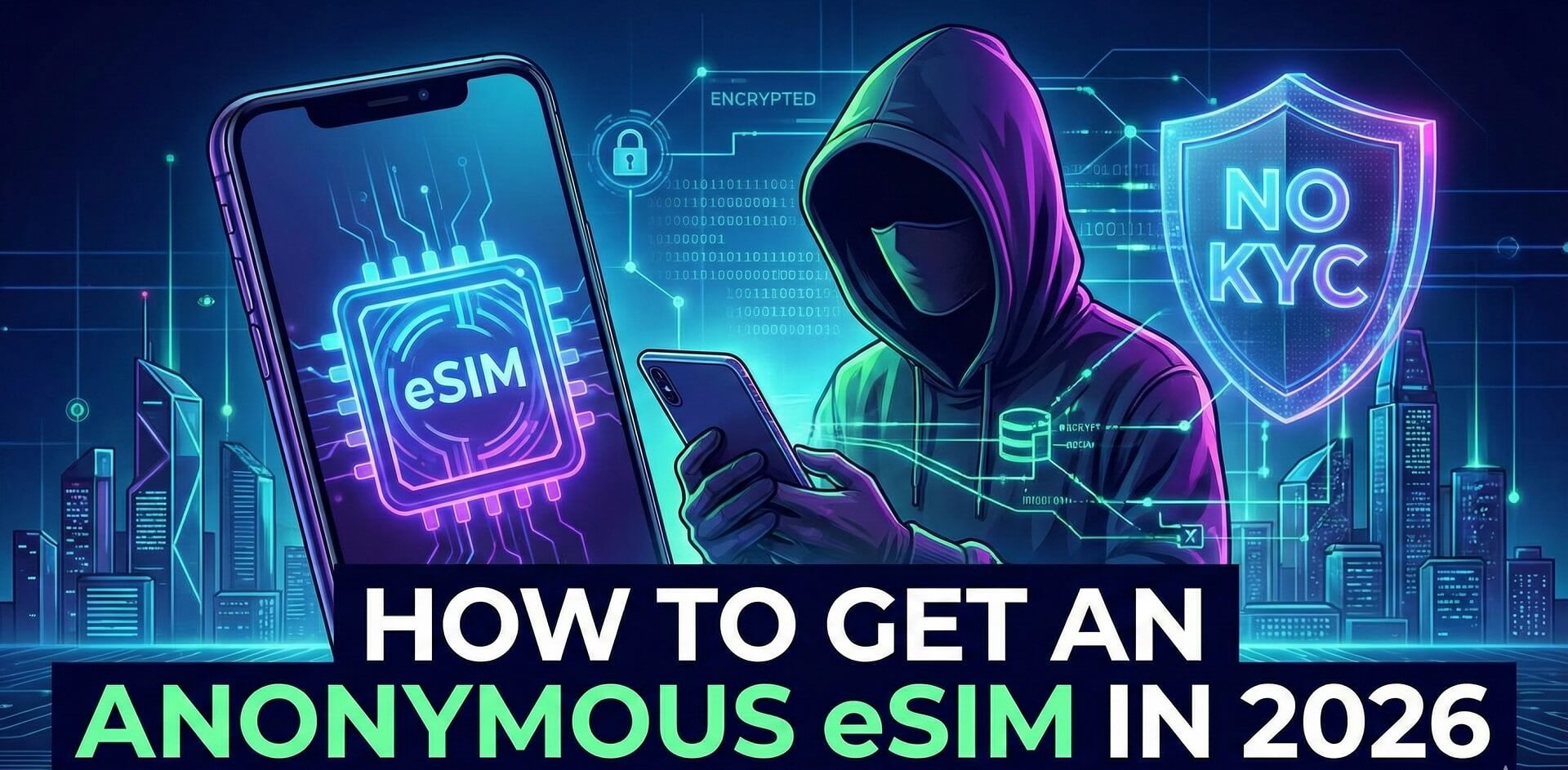
What Is an Anonymous eSIM?
At its core, an eSIM is a digital version of the old-school SIM card. It’s rewritable, embedded in your device, and allows you to activate service from a telecom provider without needing to pop open your SIM tray. Handy? Absolutely. But anonymous? Not so fast.
Traditional eSIM providers typically still enforce KYC requirements. You might have to submit identity documents, verify via phone number, or register through an app. This ties your data activity and often your location, back to your real-world identity.
An Anonymous eSIM Without KYC flips this model. Instead of asking who you are, it just asks how much data you want. No ID, no email, no phone number. Just scan, pay with crypto, and connect.
Why Anonymity Matters (Especially in 2026)
Let’s not mince words: 2025 hasn’t been a banner year for privacy. 2026 has just started and we doubt anything will change but in contrary will become even worst. SIM registration is now mandatory in virtually every major country. Cross-border data sharing between telcos and intelligence agencies has become the norm. And corporations continue to expand their surveillance reach via mobile devices.
An anonymous eSIM lets you:
- Avoid being tracked via SIM metadata
- Travel without exposing your identity
- Use burner devices or secondary phones for sensitive work
You wouldn’t post your bank account details on Instagram, right? So why give up your location, identity, and call metadata just to check Google Maps?
A true Anonymous eSIM Without KYC is more than a privacy preference—it’s a security requirement for journalists, activists, whistleblowers, and anyone who thinks twice about handing over personal data.
Quick Comparison Table: Traditional SIM vs. Anonymous eSIM
| Feature | Traditional SIM / eSIM | Anonymous eSIM (ZeroID) |
| Requires ID / KYC | Yes | No |
| Payment Methods | Credit / Debit Card | Crypto (SOL, USDC, etc.) |
| Anonymity Level | Low | High |
| Activation Time | Hours to Days | Instant (via QR) |
| Data Linked to Identity | Yes | No |
The Risks of KYC SIM Cards
Governments often justify SIM registration laws under the guise of national security or fraud prevention. But once your SIM is tied to your name, date of birth, and passport, it becomes a powerful surveillance tool. What’s framed as “safety” quickly turns into permanent traceability.
KYC-based SIM cards:
- Link every call, SMS, and data session to your identity
- Can be used to geolocate your real-time movements
- Create centralized databases that are routinely breached, leaked, or abused
- Are vulnerable to SIM swap attacks—a common technique used by hackers to hijack your mobile identity
And the risk doesn’t stop with hackers. Telecom companies often retain metadata for years, sharing it with third parties, advertisers, or authorities. Sometimes they do this voluntarily, sometimes under pressure. Even if your messages are encrypted, your metadata still tells a detailed story about who you talk to, when, where, and for how long.
Once compromised, a KYC SIM can be catastrophic. Attackers can intercept SMS-based two-factor authentication, reset passwords, drain crypto wallets, and lock you out of your own accounts—often in minutes. Recovery is slow, painful, and rarely complete.
In short, if you're using a registered SIM, you’re walking around with a digital dog tag hanging from your neck.
Fact: In 2025 alone, over $100M was stolen via SIM swap fraud.
And that number doesn’t include the unquantifiable cost of lost privacy, censored speech, or people forced to self-silence because they know they’re being watched.
How ZeroID Enables Anonymous Connectivity
ZeroID delivers a frictionless, Anonymous eSIM Without KYC, built from the ground up for people who don’t want their mobile connectivity tied to their real-world identity. Instead of retrofitting privacy onto legacy telecom systems, ZeroID flips the model entirely.
Here’s how it works:
- No registration required. There’s no account creation, no ID upload, no email address, and no phone number to “verify.” You interact with the service directly, not through a profile that can be tracked, sold, or subpoenaed.
- Instant activation. Purchase a plan, scan a QR code, and you’re connected within minutes. No waiting periods, no manual reviews, and no surprise requests for documents after checkout.
- Crypto-native. Pay using Solana, USDC any other crypto or ZeroID’s native token. Transactions are fast, borderless, and pseudonymous by default—no banks, no chargebacks, no paper trail tied to your legal name.