Introduction
The era of fumbling with tiny SIM cards in airport kiosks is drawing to a close. As more smartphones adopt eSIM (embedded SIM) technology, staying connected while traveling has never been more seamless—or more surveilled. What once required plastic cards, paper receipts, and local carrier shops now happens digitally, often before your plane even lands.
For the millions of Privacy-Focused Travelers who want to explore the world without leaving digital breadcrumbs, eSIMs open up both opportunity and risk. Unlike traditional SIMs, eSIMs are programmable, remote, and invisible. That means faster setup, fewer fees, and (with the right provider) more control over your digital identity. With the wrong provider, it can also mean deeper tracking and longer data retention.
Fact: As of 2026, over 75% of new smartphones support eSIM technology out of the box. Adoption is no longer experimental—it’s the default for modern travel.
But before you make the leap, it’s worth understanding how eSIMs work and how to use them without handing over your passport and blood type.
What Is an eSIM and How Does It Work?
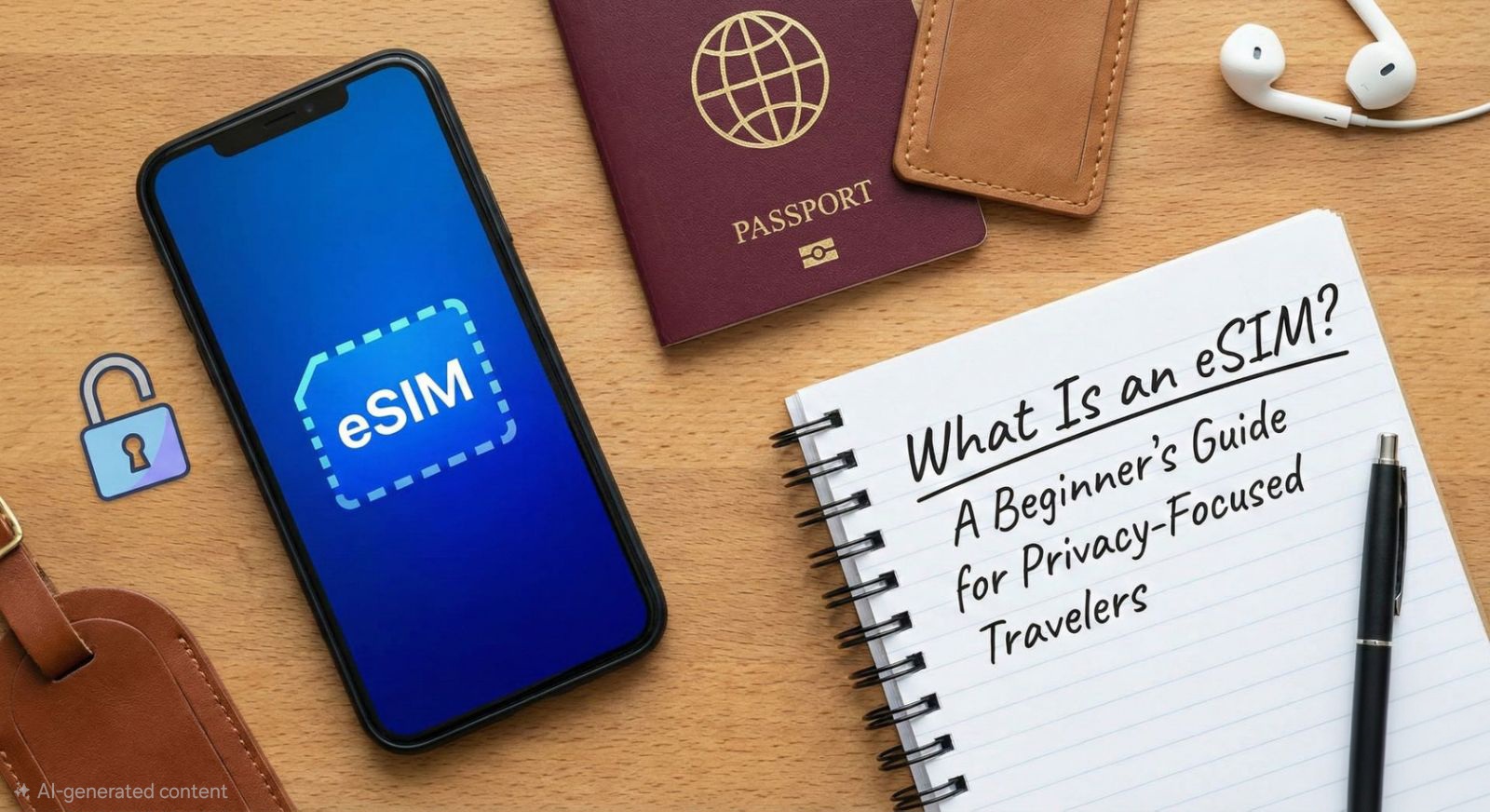
An eSIM is a digital version of the SIM card. It’s embedded in your phone’s hardware and allows you to install mobile plans without needing a physical card. There’s nothing to insert, remove, or replace—everything happens through software.
Instead of relying on a removable chip issued by a carrier, an eSIM stores network credentials securely inside your device. This makes it possible to provision, change, or remove a mobile plan remotely, often in seconds.
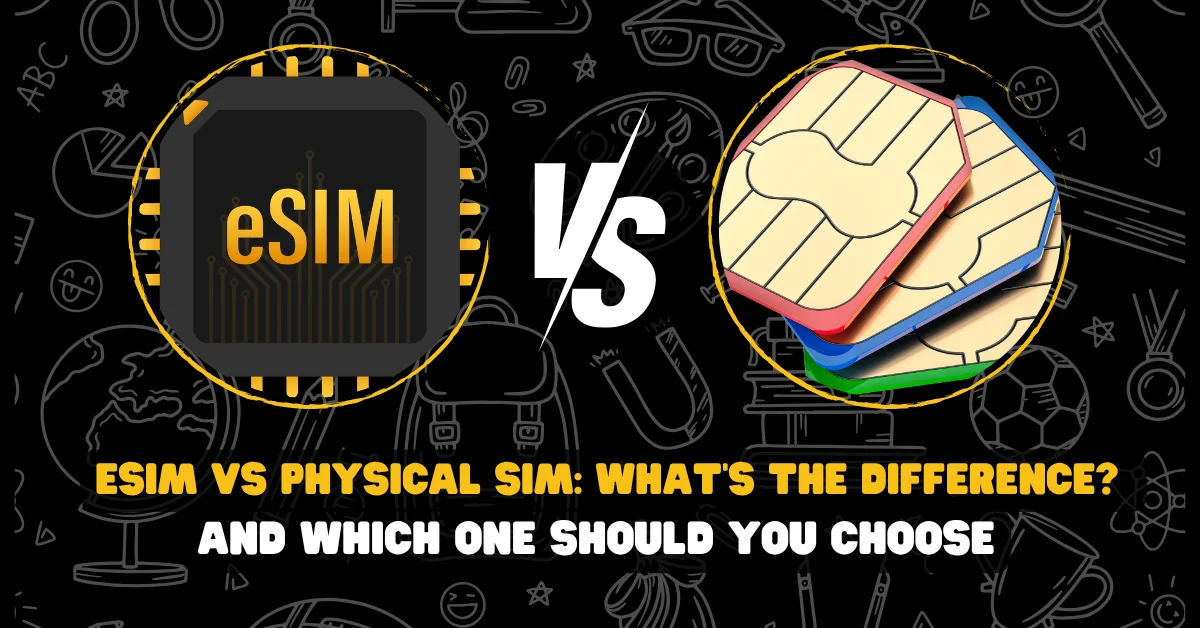
How It Differs from a Traditional SIM:
| Feature | Traditional SIM | eSIM |
| Physical Card | Yes | No |
| Requires SIM Slot | Yes | No |
| Activation | Manual (insert card) | Remote (QR or app) |
| Switch Between Carriers | Inconvenient | Easy, with one tap |
| Privacy Risk | Medium to High | Depends on provider |
When you activate an eSIM, your device downloads a carrier profile that authorizes access to a mobile network. This usually happens by scanning a QR code or tapping an activation link, with no physical interaction required.
Most modern smartphones allow multiple eSIM profiles to be stored at the same time. You can keep one for your home number, another for travel data, and switch between them as needed—making eSIMs especially useful for frequent flyers, digital nomads, and multi-country travelers.
The key takeaway is that eSIMs change how connectivity is delivered, not what it does. Calls, texts, and data still work the same way. The real difference lies in flexibility, speed, and—depending on the provider—how much of your identity you’re required to hand over just to get online.
Benefits of Using Anonymous eSIMs While Traveling
For Privacy-Focused Travelers, the benefits of eSIMs go beyond convenience.
Enhanced Privacy & Data Protection
- No physical card to track or clone
- Reduces exposure to data breaches: No carrier account, no stored personal info
- Limits tracking by telecom providers: Especially when no KYC is required
Ideal for:
- Privacy-conscious travelers
- Investigative journalists
- Whistleblowers and NGO workers
- Digital nomads operating in surveillance-heavy regions
Financial & Logistical Benefits
- Avoid roaming fees by selecting local or regional plans
- Switch carriers on the fly depending on location or signal strength
- No need to visit a store or interact with pushy salespeople in broken English (unless that’s your thing)
Tip: Combine an anonymous eSIM with a privacy-first VPN and secure messaging for a stealthy travel setup.
Use Case Table: Who Should Use Anonymous eSIMs?
| Traveler Type | Why It Matters |
| Digital Nomad | Stay private across regions, avoid overpriced SIMs |
| Journalist in Conflict Zone | Prevent tracking or telecom-based doxxing |
| Casual Traveler | Avoid sharing passport details at local SIM shops |
| Crypto Investor Abroad | Secure sensitive data & location-based activity |
Privacy Concerns with Traditional eSIM Providers
Most eSIM providers offer ease. Few offer privacy.
KYC and Personal Data Collection
Many traditional telecoms require Know Your Customer (KYC) procedures. This means:
- Uploading a passport or national ID
- Linking your SIM/eSIM to a permanent identity
- Storing your data with third parties
In some cases, even your IP address and location at the time of activation are logged.
Tracking and Metadata
Even if your calls and messages are encrypted, telecoms can still collect metadata:
- Who you talked to
- How long you talked
- Where you were when you did it
And that metadata? It's more revealing than you'd think.
Fact: The NSA has used telecom metadata to build behavioral profiles and identify people’s networks of contacts—even without seeing message contents.
Enter ZeroID – A Private, Travel-Ready Solution
ZeroID is a blockchain-powered eSIM platform that offers anonymous mobile data in 140+ countries. It’s built specifically for people who don’t want to trade privacy for connectivity.
Key Features:
- No KYC required: No ID, no account, no email
- Crypto payments: Pay with USDC, SOL, or ZEROID Token
- Global reach: Local, regional, and global plans
- Instant activation: Scan a QR code, go live in 60 seconds
Whether you’re backpacking through Europe, laying low in the Balkans, or running a crypto security audit in Dubai, ZeroID gives you the bandwidth you need—without ever asking who you are.
FAQs
Can I use eSIMs with any phone?
Most phones made after 2019 support eSIMs. Popular supported devices:
- iPhone XS and later
- Google Pixel 3 and up
- Samsung Galaxy S20+
- Many modern tablets and laptops
Do eSIMs support voice calls?
Yes and no.
- Data-only eSIMs like ZeroID do not include voice minutes.
- Use encrypted apps (Signal, Session, Jami) for VoIP calling.
Conclusion & CTA
For Privacy-Focused Travelers, the eSIM isn’t just a convenience—it’s a toolkit for digital sovereignty. It allows you to:
- Stay connected without being surveilled
- Navigate international borders without handing over your identity
- Activate mobile service without creating accounts or sharing data
And in 2026, that’s not a luxury—it’s a survival skill.
ZeroID offers:
- Fast, global mobile data
- No surveillance, no metadata logging
- Private, crypto-native onboarding
Whether you’re a world explorer or just want to check Google Maps without inviting half the internet into your life, ZeroID is ready for your journey.
[Subscribe here] to receive monthly privacy guides, secure tech reviews, and travel tools for the modern digital nomad. No spam, no tracking—just freedom.
Digital Privacy Travel Checklist
| Tool | Purpose |
| ZeroID eSIM | Anonymous global mobile data |
| GrapheneOS (Pixel) | De-Googled mobile OS |
| Session / Element App | Decentralized encrypted messaging |
| Mullvad VPN | Hide IP and encrypt internet traffic |
| Faraday Sleeve | Optional extra layer for extreme OPSEC |
Travel light. Travel private. Travel smart.